



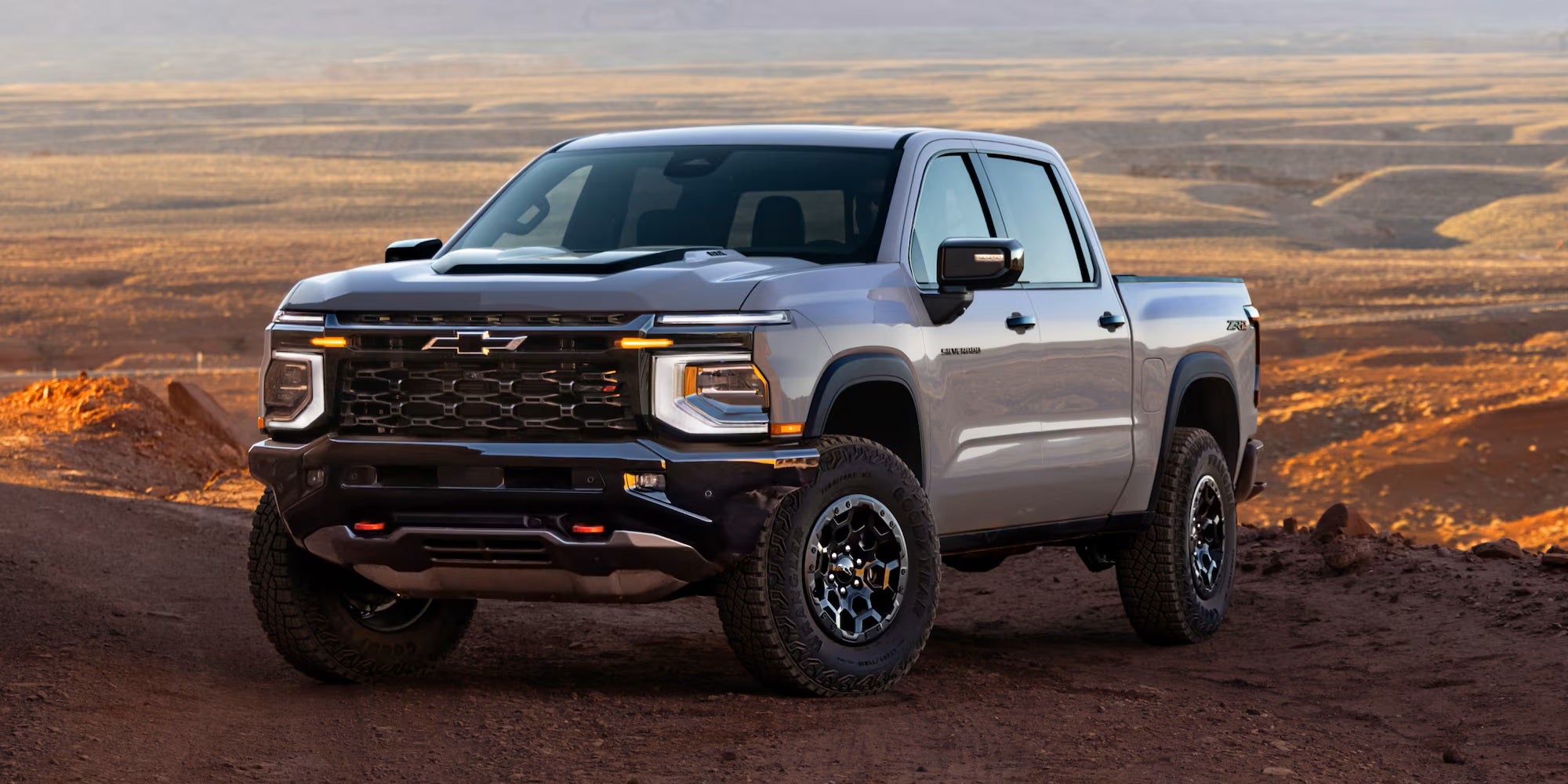
Choosing between a Toyota Tundra and the 2027 Chevy Silverado starts with how you actually use a truck: who rides along, what goes in the bed, and what you tow. At Northwest Chevrolet in McKenna, part of our parent dealer group, Dinsmore Auto Group, we help you compare Chevrolet trucks around those everyday needs. The Silverado discussed here is the light-duty Silverado 1500, not an HD model, and Chevrolet lists its redesigned 2027 truck for availability beginning in late 2026.
Key Takeaways
Compare similarly equipped trucks rather than assuming matching trim levels offer matching capability.
Published towing maximums do not describe every cab, bed, and drivetrain combination.
Passengers, accessories, cargo, and trailer tongue weight all use available payload.
Fuel choice, maintenance coverage, and warranty terms belong in the ownership comparison.
Comparable Trims, Equipment, and Budget
A Tundra SR5 and Silverado LT are useful starting points for an everyday truck comparison, but they are not automatically equivalent in equipment or purchase cost. Match the cab, drivetrain, engine, and towing equipment before comparing actual offers.
For family use around McKenna, start with a Tundra CrewMax and Silverado Crew Cab. Then decide whether four-wheel drive, heated seats, or a longer bed belongs on your must-have list. A truck with extra comfort equipment may be appealing, but those additions can change both its cost and remaining payload.
One detail worth checking during a dealership comparison is what comes standard versus what requires a package. We recommend reviewing the window sticker and build sheet together, rather than treating the trim badge as a complete equipment list.
Engine Choices and Everyday Driving
The Silverado offers more engine types, while the Tundra offers gasoline and hybrid twin-turbo V6 powertrains. That gives shoppers different ways to balance towing needs, driving feel, and fuel expenses.
For 2027, Chevrolet lists an updated TurboMax, its turbocharged four-cylinder engine, alongside new 5.7-liter and 6.6-liter V8 engines. The Duramax 3.0-liter Turbo-Diesel, Chevrolet’s diesel engine option, completes the lineup. All four use a 10-speed automatic transmission.
Toyota offers i-FORCE MAX, its available hybrid powertrain combining a twin-turbo V6 with an electric motor, as an alternative to its gasoline twin-turbo V6. Hybrid assistance and diesel power work differently, so neither should be chosen on the assumption that it will automatically deliver the lowest ownership costs.
On a test drive, we recommend paying attention to acceleration, transmission response, and ride comfort. Those differences matter on daily drives toward Yelm, even when neither truck has a trailer attached.
How Do Towing Ratings Compare With Similar Configurations?
The 2027 Silverado has a published maximum towing capacity of 13,700 pounds, but that figure cannot be applied to every Silverado. Chevrolet associates that maximum with the available 5.7-liter V8, while other engines have different limits.
For context, Toyota published a 12,000-pound maximum for the 2026 Tundra. That is a year-specific reference, not a substitute for checking the updated Tundra’s configuration-specific rating. Comparing those two headline figures alone does not establish what similarly equipped four-wheel-drive family trucks can tow.
For a fair comparison, match a Silverado Crew Cab with a Tundra CrewMax, choose similar bed lengths and the same drivetrain type, then check each truck’s towing documentation. Engine, axle configuration, towing packages, and installed equipment all belong in that check.
A frequent point of confusion is trailer weight. Use the trailer’s loaded weight, including supplies and equipment, rather than its empty advertised weight. Also confirm the hitch rating and gross combined weight rating, the maximum permitted weight of the loaded truck and trailer together.
How Much Payload Remains With Passengers and a Trailer?
Remaining payload equals the truck’s labeled occupant-and-cargo allowance minus the people, cargo, added accessories, and trailer tongue weight it carries. Tongue weight is the downward load a conventional trailer places on the hitch.
Consider a hypothetical truck with a 1,700-pound payload allowance. Subtract 600 pounds of passengers, 200 pounds of cargo and hitch equipment, and 750 pounds of tongue weight. That leaves only 150 pounds available, even if the trailer itself is within the truck’s towing limit.
This calculation applies to either truck. Chevrolet lists a maximum available payload of 2,340 pounds for the 2027 Silverado with TurboMax, but that is not the allowance for every Silverado. Likewise, Toyota’s published 1,940-pound maximum for the 2026 Tundra does not describe every Tundra.
We recommend checking the driver-door loading label early. It is easy to focus on towing capacity and overlook how quickly family seating and trailer tongue weight consume payload.
When browsing Northwest Chevrolet inventory, compare the cab, engine, and equipment on individual listings before narrowing your Silverado choices.
Cab and Bed Options for Family Seating and Hauling
A Silverado Crew Cab and Tundra CrewMax are the natural starting points when rear-seat passengers ride regularly. A smaller cab can make sense when bed space matters more than rear-seat room.
The Silverado lineup includes Regular Cab, Double Cab, and Crew Cab layouts. Toyota’s established Tundra combinations include Double Cab models with approximately 6.5- or 8.1-foot beds and CrewMax models with approximately 5.5- or 6.5-foot beds; confirm the combinations offered for the specific model year you are considering.
For McKenna drivers carrying tools during the week and family members on weekends, a longer bed can reduce the need to leave the tailgate down. The tradeoff is a longer truck to park and maneuver.
Rear-door access is another comparison that becomes clearer in person. Check how easily passengers enter and whether the rear seating position feels comfortable, rather than relying only on the seating count.
Fuel, Maintenance, and Warranty Costs
Neither truck has one ownership-cost figure that applies to every buyer. Annual mileage, fuel type, towing frequency, insurance, tires, and maintenance all affect what you spend.
Compare EPA fuel-economy ratings for the exact engine and drivetrain when available. Estimate annual fuel use by dividing your yearly mileage by the relevant combined mpg figure, then apply local fuel costs. For regular trips toward Olympia, separate everyday driving from towing, since an unloaded fuel-economy rating is not a towing estimate.
Your first oil and filter change is covered with Chevrolet when you bring your truck in for its qualifying maintenance visit within the first 12 months. That same visit also includes a tire rotation and a multipoint inspection. For the 2027 Tundra, ToyotaCare covers factory-scheduled maintenance at the 5,000- and 10,000-mile service intervals, subject to its one-year or 10,000-mile limit, whichever comes first.
Both brands list three-year/36,000-mile basic coverage, and gasoline powertrain coverage generally extends to five years/60,000 miles. Toyota separately covers qualifying hybrid components and the hybrid battery. Confirm the applicable warranty booklet, particularly when comparing a diesel Silverado with a hybrid Tundra.
Explore Silverado Trucks in McKenna
Visit Northwest Chevrolet in McKenna, part of the Dinsmore Auto Group, to see our current inventory and discuss 2027 Silverado availability. We can help you narrow the cab, bed, and engine choices, then schedule a test drive in an available truck that fits your needs.
*Penned by AI, polished by humans